 Fibromyalgia: Burden of Disease and Disability Dr David Gotlieb. Rheumatologist. Cape Town |
|||||||||||||||||||||||||||||||||
|
Fibromyalgia, causes a syndrome of diffuse
body pain, usually striking females aged thirty to sixty.
These patients complain of pain, such that they
hurt from head to toe and often feel that "they have
been run over by a bus" on waking in the morning. The main complaint is of pain and discomfort
especially in the neck and shoulder girdle and low back and they suffer
from significant morning stiffness and are beset by ongoing fatigue,
insomnia,
ongoing "brain fog",
memory impairment and to complicate matters, suffer from widespread
somatic symptoms that include headaches, irritable bowel, irritable
bladder, jaw pain and become quite significantly dysfunctional.
The problem is that, other than the finding, on
examination, of tender points, all tests are non-specific, and there is
nothing that further characterizes the problem on the examination, other
than tenderness in multiple sites, especially head, neck and low back. This is in stark contrast to inflammatory
arthritis, such as rheumatoid arthritis, where the presence of swelling
and the clinical finding of an inflammatory joint arthropathy define the
problem. In such inflammatory arthritis cases, tests may
reflect inflammation and also the presence of antibodies. In fibromyalgia, all tests and investigations are
NORMAL. Because fibromyalgia reveals little on the
examination, as a consequence, there are many misconceptions that arise. Patients have been dismissed as depressed or
anxious, and simply as having a failure to cope in society. There is a misconception that the diagnosis
requires the exclusion of all other possibilities and in the past, it
was simply not recognized as a specific condition. We now know that in reality, the syndrome is a
neurological pain disorder, characterized by central nervous system
dysfunction with central sensitization of the actual input of nerve
transmission to the brain.
We know that
neural origin pain is perhaps the most severe pain that patients can
suffer. These patients are non-responsive to standard
anti-inflammatory drugs or analgesics, and they search from healthcare
provider to health provider undertaking unnecessary tests,
investigations, procedures and even surgery for no good cause.
This amounts
to enormous medical costs and little wonder that stress or depression
can be associated with the condition. These factors can further
contribute to the downward spiral and may well bring the condition to a
head.
The diagnosis is a specific diagnosis. It
is not a diagnosis of exclusion. Symptoms of fibromyalgia include:
The American College of Rheumatology defined
criteria for this problem in 1990. The problem termed criteria for fibromyalgia
included:
A history of
widespread pain for more than three months on both sides of the body –
above and below the waist and axial skeleton (cervical spine, anterior
chest, thoracic pain or low back pain). Association with the presence of 11 out of 18
tender points on physical examination. Of note the presence of second clinical disorder
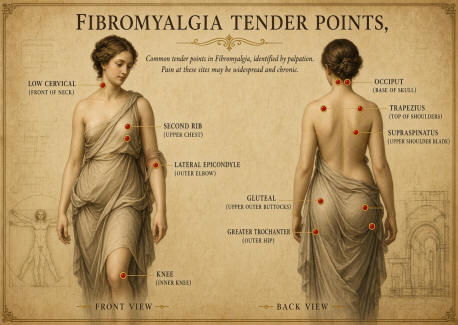
does not exclude the diagnosis of fibromyalgia. The classic 18 tender points (9 pairs)These are the traditional sites of exaggerated tenderness: Occiput - base of the skull (back of head/neck)Low cervical - front/sides of the lower neck Trapezius - midpoint of the upper shoulder Supraspinatus - above the shoulder blade Second rib - upper chest (near the costochondral junction) Lateral epicondyle - outer elbow area Gluteal - upper outer buttocks Greater trochanter - outer hip Knee - inner knee (medial fat pad) 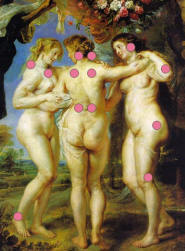
This gave a sensitivity of 88.4% and a specificity
of 81.1%. However, the ACR criteria where never intended to
be applied to individual patients for the purpose of diagnosis. Their use has been misinterpreted. They are for research purposes. The pain may wax and wane and migrate. Tender points measure not only how tender
individuals are, but also how distressed they are. The tender point sensitivities influenced by
gender, age, aerobic fitness and mood disorder. New criteria were published in 2010 for diagnosis of fibromyalgia by the american college of rheumatology. They were revised again in 2016.
2016 ACR Diagnostic CriteriaA patient meets the criteria for fibromyalgia if all of the following are satisfied: Widespread Pain Index (WPI) and Symptom Severity Scale (SSS) WPI greater or equal and SSS greater or equal 5, or WPI of 4 to 6 and SSS greater or equal 9.
Generalized pain
Pain in at least
4 of 5 body regions. This helps avoid misclassifying regional pain syndromes.
Duration
Symptoms have been present at a similar level for at least 3 months.
Other diagnoses How the Scores Are Calculated
Widespread Pain Index (WPI 0-19) Right upper: jaw (right)*, shoulder girdle, upper arm, lower armLeft lower: hip (buttock/trochanter), upper leg, lower leg Right lower: hip (buttock/trochanter), upper leg, lower leg Axial: neck, upper back, lower back, chest*, abdomen* (*Not counted toward the 4-of-5 generalized pain requirement.) Symptom Severity Scale (SSS, 0 - 12) Severity (0 - 3 each) over the past week of:Fatigue Waking unrefreshed Cognitive symptoms (fibro fog) Plus 1 point each if present in the past 6 months: Headaches Pain or cramps in the lower abdomen Depression
The diagnosis at
the bedside is a clinical one. It is made on listening to the patient, plus
clinical examination of the patient. A good
examination will help to exclude other obvious underlying disease, such
as inflammatory arthritis, and thereafter one can do with a minimal
amount of tests, required to exclude perhaps, thyroid abnormalities,
inflammation with an ESR and CRP and blood count, and as few further
radiological investigations as possible. Most rheumatologists would suggest that the
diagnosis is easy to make. The patients are easily recognized if one is aware,
educated, and look out for it. Yet this is a diagnosis that is usually missed by
most primary practitioners and many specialist physicians. In numerous studies that have been undertaken, it
is quite common to find a long delay in the making of this diagnosis. In a survey of 368 patients of arthritis to
evaluate impact on daily life, rheumatoid arthritis patients had a mean
of 2.01 years, before diagnosis was made, compared to fibromyalgia,
which had a delay to diagnosis of 6.67 years.
This is similar to experience widely noted around
the world.
Clearly, primary physicians require education to
recognize the condition.
Fibromyalgia will constitute between 5 and 6% of
all patients presenting to general practice. 10 to 27% of patients seeing a Rheumatologist have
fibromyalgia. It is 6 to 7 times more common in females. Genetic relationships are noted. The average age of the patient is between 30 and 60
years. In fact, it may well occur in childhood as well. 20 to 30% of
patients, who have fibromyalgia, will have noted that the problem may
have been precipitated by trauma or surgical or emotional distress or a
catastrophic event. Co-existent rheumatic disease
is possible. As many as 25% of patients with rheumatoid
arthritis and 80% with Lupus and 50% of Sjogrens syndrome have been
shown in some studies to have fibromyalgia as co-existent problems.
Etiology: We would
define pain as an unpleasant sensory and emotional experience associated
with actual or potential tissue damage or described in terms of such
damage. The pain may be affected or influenced by the
situation where or when the pain arises. Fear relating to the underlying issue, and emotion
or depression or even optimism of the underlying individual will have a
major impact on pain perception. Cultural factors therefore play a major role in how
an individual interprets pain.
Types of pain There
are different types of pain.
1.
Peripheral or nociceptive pain: relates to mechanical damage in
the tissue and is also known as somatic or even visceral pain, where
there has been a chemical, inflammatory or mechanical component.
These problems
include diseases such as osteoarthritis or rheumatoid and are usually
responsive to anti-inflammatories or anti-inflammatory or analgesic
medication.
2.
Neuropathic pain occurs with damage or entrapment of peripheral nerve.
This results in
sensitivity of the nerve and ongoing firing of the nerve membrane. This causes a poor
response to anti-inflammatories or painkillers and would occur commonly
in diseases such as diabetes or shingles or post hepatic neuralgia or
trigeminal neuralgia.
3.
Central
or non nociceptive pain.
This is the most
severe kind of pain. This relates to the central disturbance in pain
processing itself and includes conditions such as fibromyalgia,
irritable bowel, tension headaches or chronic idiopathic low back pain. These patients have
ongoing pain that is non responsive to analgesia or anti-inflammatory
drugs or even opiates. Unfortunately, many
patients are treated with such drugs and develop dependency on such
drugs with their inappropriate use. They do respond
however to central neuro-active compounds such as Tricyclic or
Norepinephrine-serotonin-reuptake inhibitors and anti-epileptic drugs
such as Pregabalin or Neurontin.
The pain pathway.
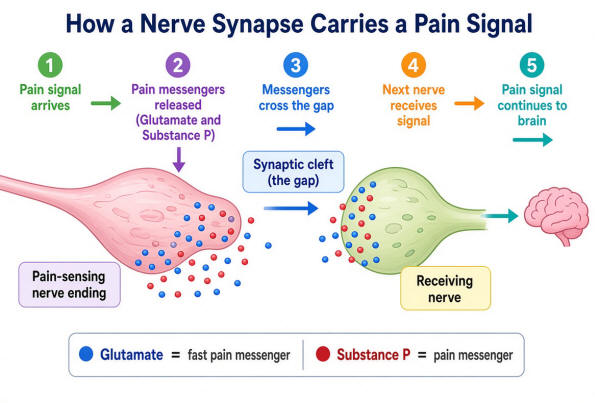
The pain neuronal pathway starts at the receptor at
the periphery. The pain signal travels to the spinal cord. In
doing so it utilizes either the fast fibres known as the A-delta fibres,
which are myelinated or alternatively the unmyelinated and slower C-
fibres. At the
periphery, the pain receptors maybe triggered by a local insult,
resulting in chemical mediators
such as substance P, Potassium ions, Adenosine triphosphate
- ATP, histamine and Bradykinin, as well as prostaglandins and Calcitonin
gene related peptide. The signal transmits through the nerve to the
dorsal horn of the spinal cord where synapses transmit the signal to the
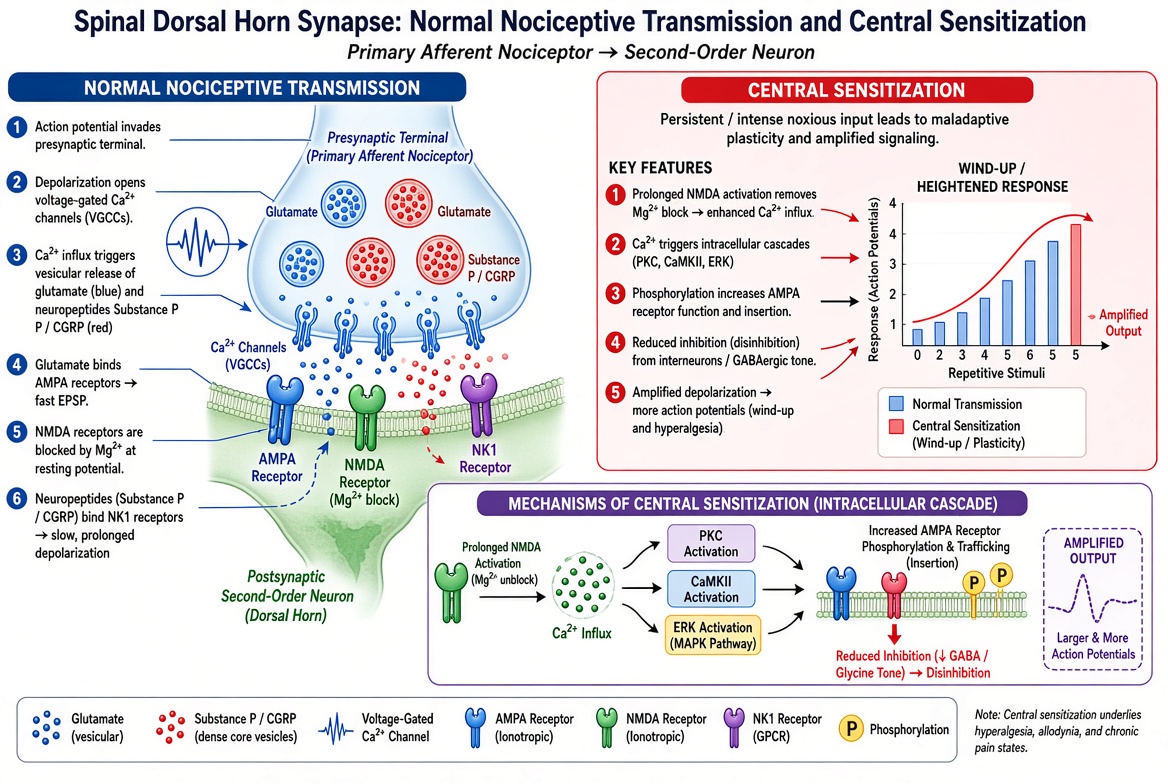
spinothalamic tracts, and up to the brainstem. At the dorsal nerve root ganglion, the A-delta - rapid fibres- trigger the AMPA receptors, which are Trans membrane
receptors for glutamate. The slower C
fibers have the potential to trigger both the AMPA and NMDA receptors. The NMDA receptors however are usually blocked by
magnesium ions, which prevent glutamate entering the post synaptic cell
and prevent signaling. It is only when there is constant stimulation with
glutamate able to displace the magnesium ions, allowing glutamate to
enter the cell and trigger the next neuron.
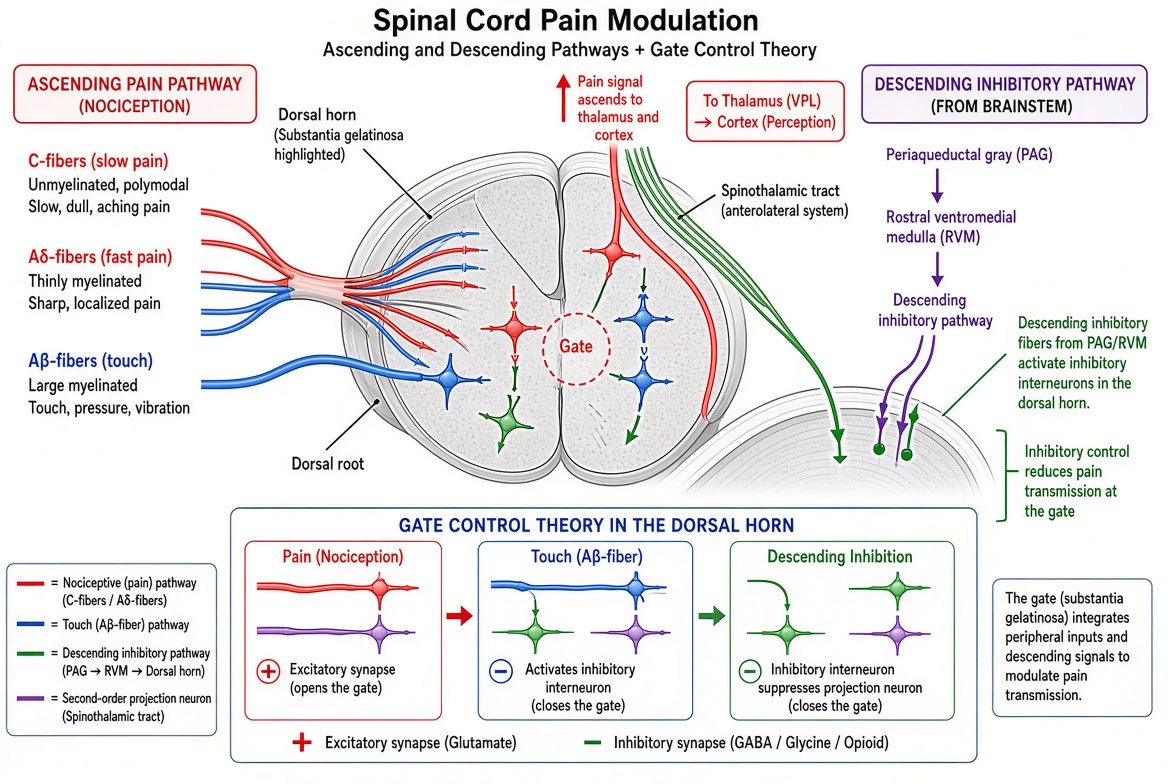
Several mediators moderate what ascends up
the spinal cord and this is termed the gate control mechanism.
Nociceptive signals (from C-fibers and Aδ fibers) enter the dorsal horn, synapse on second-order neurons, and ascend via the spinothalamic tract toward the brain. Descending inhibitory fibers: Pathways from the brainstem (periaqueductal gray and rostroventral medulla) descend in the dorsolateral funiculus and release inhibitory neurotransmitters (e.g., serotonin, norepinephrine) in the dorsal horn. Gate control at the spinal cord entrance: In the dorsal horn (especially substantia gelatinosa), descending inhibition and large-diameter (Aβ) touch fibers activate inhibitory interneurons that " close the gate " reducing transmission of pain signals to the ascending pathway. Intense nociceptive input can open the gate; modulation can close it. This is the classic spinal mechanism of endogenous pain control (Melzack & Wall gate control theory plus descending modulation). Descending neurons from the brainstem-- descend down the spinal cord and at the level of the synapse, in the dorsal horn release endogenous opiodes, serotonin, noradrenaline and gamma amino butyric acid - GABA. These therefore prevent signals ascending up the spinothalamic tracts. Disruption of this descending inhibitory pathway
results in chronic pain syndromes. Chronic pain is defined as pain for more than three
months without any biological value. In a survey of chronic pain in Europe, it is noted
that pain in the form of chronic pain, affects approximately 2% of the
population. Of these: 20% had associated depression. 60% were less able or unable to work. 20% were unemployed because of the pain. 66% had visited there doctor between 2-9 times in
the previous six months. 50% were using over the counter analgesia 66% were taking prescription medication. Chronic pain is caused by: Sensitization of the pain receptors, which unmask
silent pain receptors known as collateral sprouting, where the receptor
field widens from the original source at the membrane or skin surface. Central sensitization. Large scale release of
glutamate causes chronic stimulation removing the magnesium block and
allowing ongoing stimulation.
This is called windup. Deficiency of the inhibitory descending fibres from
the brainstem. Spreading of the receptor fields occurs therefore
to different spinal levels and the problem becomes diffuse and involves
the body in general.
It is this mechanism, that we now know how
fibromyalgia pain arises. The pain of fibromyalgia is severe, ongoing,
generalized and chronic. The patients describe unrelenting and
non-responsive pain.
Evidence for central pain mechanism of
fibromyalgia.
Central pain dysregulation. Peripheral tissues in fibromyalgia are normal. MRI or biopsy of these peripheral tissues including
what is often interpreted by the patients as nodular lesions under their
skin at these tender points, are entirely normal. There is no difference in peripheral tissue
pathology. There is an
abnormal response however to different stimuli. There is a normal threshold for sensing normal
stimuli but is a lower threshold at which such stimuli becomes painful
and therefore these patients feel low level of stimulation to be a pain
source. Multiple trials have been done showing the lower
threshold at which pressure becomes painful in these patients. Similarly, temperature also may be recorded as
painful at a lower temperature, compared to that felt by normal
subjects.
Fibromyalgia is thought to be disordered, sensory
processing. There is a reduction in inhibitory pathways and
uncontrolled input of signals to the brain - windup. There is an uncontrolled spreading and intractable
pain. The smallest stimulation provokes pain - something
called allodynia.
Functional MRI. These studies demonstrate blood flow in the brain
to different stimuli. Such changes may be recorded within seconds. An elegant study, by Gracely et al, showed that a
low stimulus of pressure produced a high pain level and there was early
triggering of cerebral blood flow compared to triggering of control
subjects who required greater pressure to achieve the same pain levels
and equivalent cerebral blood flow patterns. Similar pressure resulted in low levels of pain. Greater pressure was required to induce cerebral
blood flow changes and the perception of pain in normal subjects. Studies showed that with pain from pressure applied
to the thumb nail bed, that there were 13 regions of increased brain
activity revealed in a fibromyalgia group, compared with 1 in the
controlled group. However, no statistical difference was identified
when increased pressure applied to controls, caused the same amount of
pain sensation in the control population compared to the subjective pain
response of the fibromyalgia patients.
SPECT and PET scanning also demonstrate brain
cerebral blood flow and brain activity but are more delayed, compared to
functional MRI. Therefore, the functional MRI has provided the most
accurate method to-date, of observing cerebral blood flow in response to
application of a stimulus. Mountz and Bradley demonstrated a reduction in
baseline thalamic metabolic activity in fibromyalgia patients compared
to normal control subjects. NMDA receptor antagonists such as dextromethorphan
and Ketamine reduce experimental windup in fibromyalgia patients. Descending inhibitory pathways are dysregulated in
fibromyalgia patients as a response to noxious stimuli. Spinal fluid levels of 5 hydroxy-tryptamine,
serotonin levels, are reduced. 5 hydroxy-tryptamine is a mediator in the
inhibitory mechanism of the descending inhibitory pathways. Substance P, one of the mediators for stimulation
of the dorsal horn neurons are increased by almost 3 times, in the
spinal cord of fibromyalgia patients. We also note inflammatory cytokines are also
increased, as is insulin like growth factor.
Autonomic nervous system dysfunction. The second mechanism which separates fibromyalgia
from the average subject is that of autonomic nervous system
dysfunction. The autonomic nervous system provides our fight -
flight response. It controls the nervous system that is " automatic
",
that runs our bodies beyond our control. This would include functions such as our heart
rate, bowel, urogenital and temperature homoeostatic responses to the
environment. The sympathetic nervous system persistently remains
hyperactive in fibromyalgia patients, and is hypo-reactive to stress.
There is an association between stress and enhanced
pain. In fibromyalgia patients, there is chronic
hyper-stimulation of beta adrenergic receptors, leading to receptor
desensitization and down-regulation. Therefore
such patients are less able to respond to the surrounding stress or
homeostatic requirements to our surrounding environment. Tilt - table testing has been shown to increase the
incidence of orthostatic hypotension compared to controls and there is a
reduction in heart rate variability on tilt table testing. The
autonomic nervous system supplies nerve supply to the visceral organs. Dysregulation, may well be the cause of the
headaches and migraines that these patients are noted to have. In addition, it is associated also with the bladder
problems, bowel problems, temperature dysregulation, visual focus
symptoms and oesophageal symptoms, as well as the problems of fatigue,
tiredness and " brain fog" . It also aggravates the temperomandibular TMJ jaw
syndrome.
Sleep dysfunction
Fibromyalgia patients frequently described were
sleep pattern and feel unregistered. Abnormal sleep patterns on the
electroencephalography EEG, with fibromyalgia, were noted by Maldofsky
years ago. He demonstrated that patients deprived of stage
four sleep developed musculoskeletal symptoms and irritability. Studies in fibromyalgia reveal an abnormality in
the continuity of sleep and sleep architecture. Normal patients have a slow wave sleep pattern. Fibromyalgia patients have alpha or alert wave
intrusion in stage 4 REM sleep. The consequence is increased wakening, non
restorative sleep, daytime somnolence, brain fog and irritability.
The genetics of fibromyalgia. There is definite familial aggregation.
28% of children of fibromyalgia subjects will
develop fibromyalgia - this is equal to an 8.5 times risk of the
problem. Similarly, family members revealed increased mood
disorders and eating disorders as well as irritable bowel, back pain and
migraine. Genetics would appear to provide a predisposition
to developing the condition. Role of psychiatry
There is increased psychiatric co morbidity.
Of patients with primary depression, more than 50%
will present with somatic symptoms. Depression will worsen pain outcome, and vice
versa.
Antidepressants
normalize serotonin and adrenalin levels.
However, only 20% of fibromyalgia patients are clinically
significantly depressed, but up to 60% may have low levels of
depression. 20% of fibromyalgia patients had increased rates of
anxiety. 7% will have panic disorder and phobias will occur in 12% of
patients. Therefore, whilst depression and stress may be
considered part of the pattern, they are by no means the cause of the
syndrome alone.
They
certainly can influence the clinical picture however.
In her dissertation on depression and fibromyalgia in South
Africa, Govender, showed 65% of patients had minimal to mild depression
and 35% had moderate to severe depression. Secondary psychological factors, in particular
because of constant illness frequently without diagnosis, patients fear
the unknown. Secondary stress and depression will occur in 33%
of patients. Patients endure unnecessary procedures and have
difficulty finding appropriate medical care.
They experienced huge health costs and are
frequently abandoned by healthcare providers. The consequent loss of hope results in pessimism,
and they become increasingly labeled as psychiatric or psychologically
disordered. Epidemiology.
Studies in various communities around the world
showed similar prevalence between urban and rural communities as well as
first world and Third World communities. The condition is not just a disease of the rich or
avant-garde. In South Africa, a prevalence of fibromyalgia of
3.2% was noted in Cape rural workers in a community in Bedford by
Lyddell and Meyers.
(Scandinavia Journal of rheumatology 1992; supplement 94:8). In New Zealand, fibromyalgia was noted in 1.1% of
Maori population, compared to Caucasians 1.5%. In a study of 178 Amish adults in London, Ontario,
the prevalence of fibromyalgia amongst the Amish was 7.3% in the rural
population, compared to 3.8% in the Amish urban population, and 1.2% of
non-Amish rural dwellers. The condition is six times more prevalent in
females compared to males. It can occur in children.
Financial cost of disease.
Financial costs are increased.
These include direct costs of health care, and
indirect costs affecting work or domestic life.
Penrod et al looked at health service costs in
women with fibromyalgia. They noted visits to specialists and physicians
were increased. All physician visits over six months 7.12 Specialist visits
3.83 Imaging or laboratory procedures
4.56 General practitioner visits over six months
3.29 Alternative practitioners,
7.09. Number of medications
6.98. Drug doses per day
6.63.
Berger et al showed healthcare costs equal to $
9573 compared to $ 3291 in and fibromyalgia patients over a 12 month
period. Health care costs were three times higher with
fibromyalgia patients compared to non-fibromyalgia patients. Absence from work was greater in fibromyalgia
patients. Fibromyalgia patients, on average were absent,
15.83 days per year compared to 6.98 days of control population per
year.
Fibromyalgia and disability.
Impairment is defined as the anatomical or
physiological or psychological loss leads to a disability. Disability is a limitation of function that
compromises an individual's ability to perform an activity of the range
considered normal. Work disability is the inability or diminished
potential to engage in full-time gainful employment. Wolfe et al looked at 1604 patients from six
centers in the United States.
26% received at least one form of disability
payment. 16% received Social Security patients compared to
2.2% of the US population and 28.9% of patients with rheumatoid
arthritis. The study illustrated that fibromyalgia was as
disabling, as an inflammatory arthritis such as rheumatoid arthritis. 64% were still able to work. Burkhardt et al showed that quality of life, in
fact was lower in fibromyalgia patients than in patients with rheumatoid
arthritis or osteoarthritis. This was despite the absence of physical damage.
Clearly, the Health insurance industry has taken
issue with the diagnosis and payment of healthcare benefits as well as
disability benefits, to fibromyalgia patients. In a survey of 1363 patients with fibromyalgia by
the American pain foundation, 48% had difficulty with coverage for
fibromyalgia pain treatment.
15% had problems with copayment, 12% had problems with premium
affordability, 11% had delay in pre-authorization processes, 11% had
delay in access to FDA approved medication, 8% had repeated denial of
covered benefits.
Lobby groups
have fought this persistent discrimination against fibromyalgia
patients. Lynne Matallana, president and founder of the
non-profit National Fibromyalgia Association, wrote in the Pittsburgh
Post-Gazette, July 13, 2008, “There have been some insurers who take the
stand that if they make it more and more difficult for patients to get
new treatments, they will go away.”
In South
Africa, there has been a slow recognition of the existence and potential
for true disability amongst fibromyalgia patients. The illness is now listed in most insurance company
confidential medical report resumes to doctors.
Liberty life, one of the largest insurance
companies in South Africa, paid R 257 million in total disability
payments in 2008. Of these 18% went to trauma, 18% to cancer,
arthritis 4%, cardiac 7%, and skeletal 14%.
Association with trauma. There is a strong association between neck injury
and fibromyalgia. Buskila reported a 10 times increased risk.
There was a strong association with post traumatic
stress syndrome, and such patients with secondary fibromyalgia had a
worse outcome. Disability compensation -up to 30% and loss of
employment up to 70%. 21% of adults, developed fibromyalgia within one
year of neck injuries from motor vehicle accident.
Neck injuries resulted in greater risk, compared to
only the 2% of adults who developed fibromyalgia after lower limb
extremity fracture. Of note, that there was no association between work
disability and medicolegal or insurance claims.
Individual cases have been settled by the Road
accident fund in South Africa.
No specific policy has been finalized to assess all
patients with post-traumatic fibromyalgia.
There is an ongoing controversy with the diagnosis
and difficulty regarding perception of secondary gain and secondary
incentive. Because of the minimal signs of examination and
lack of radiological damage, there is a bias against the patients with
the disease and a bias of the assessment of such patients.
Patients are referred for multiple opinions by the
industry until a contradictory position favoring the insurance company
is found.
Moldofsky et al suggested in their paper, that the
studies did not show resolution of fibromyalgia at the conclusion of
medicolegal issues.
The
insurance panel requires appropriate physician selection.
The assessment should be thorough and timely and
should be perceived as fear. The assessor should be independent without conflict
of interest. In fact there should be a registry of independent
evaluators, who are educated and ask appropriate questions and can
examine appropriately without bias. Any questionnaire used should be uniform.
For a proper assessment of function, one can use
several measurements.
1.
The tender point score. 2.
The Health assessment questionnaire 3.
The SF36 health survey. 4.
The fibromyalgia impact questionnaire. 5.
A physician global score. 6.
A patient global score. 7. The ACR has published new criteria for diagnosis of fibromyalgia 2010 updated in 2016 The fibromyalgia impact questionnaire is a
sensitive index of change and correlates with the degree of disability. The average fibromyalgia patient equals 50 and
severe is greater than 70.
The maximal score is 100. The questionnaire includes 10 questions that
reflect on function severity of pain, fatigue, well-being, stiffness,
anxiety, and depression.
The health assessment questionnaire looks at
activity of daily life and includes questions on dressing and grooming,
arising, eating, well-being,
The SF36
questionnaire: looks at physical limitation, social limitation, daily
limitation, body pain, general mental health, vitality and general
health perception.
The object of the patient
- physician intervention
is primarily to make a diagnosis and to educate the patient regarding
disease and contributing factors.
The physician must be
optimistic and sympathetic
and encouraging but unbiased.
Exercise must be encouraged.
Unnecessary procedures, investigations, and in
particular surgery must be avoided. Painkillers, anti-inflammatory drugs, and sleeping
polls must be avoided. The patient should be discouraged from actively
seeking multiple opinions. Explanation of the condition should provide the
definitive answer to the multiple complaints that have baffled the
patient and healthcare providers for so long prior to diagnosis.
It is very important for the patient to understand
that the entire multiple listings of complaints, are all from one single
diagnosis - fully explainable - fibromyalgia.
It is interesting that the diagnosis is in fact an
essential component of successful fibromyalgia management.
Goldenberg et al and Fred Wolfe have shown that
patient satisfaction improves significantly after diagnosis. In addition, Hughes et al showed that there is a
clear decrease in the visits to physicians, specialists and natural
practitioners as well as a decrease in diagnostic testing and procedures
after the diagnosis is made.
Therapy of fibromyalgia.
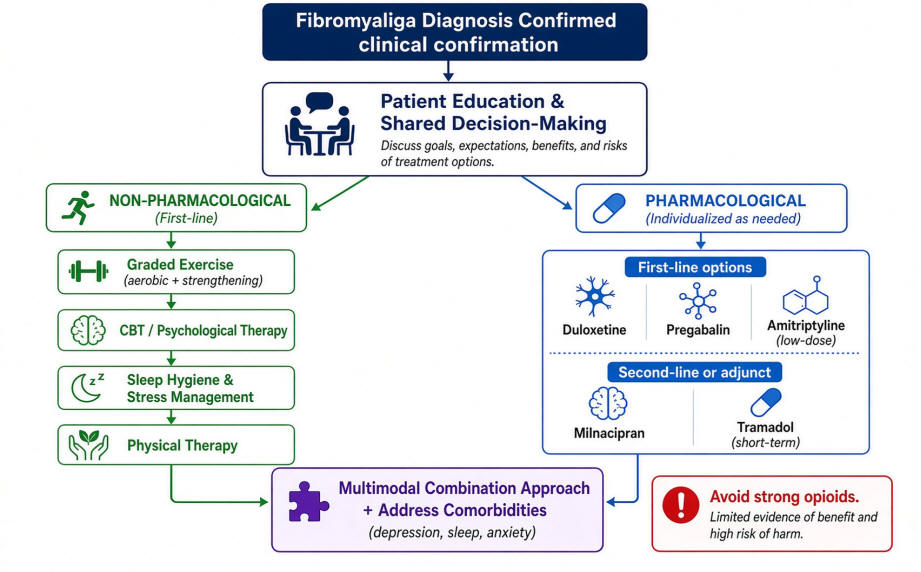
Non Pharmacological therapy
The most important non pharmacological therapy is
exercise. This involves aerobic.-.cardiovascular exercise.
This is shown to be far more useful compared to
strength training or isometric exercises.
There is some evidence for hydrotherapy and
hypnotherapy and weak evidence for acupuncture and chiropractic and
massage as well as ultrasound therapy, but no evidence for flexibility
exercises.
Pharmacological therapy.
There is no evidence that opioid drugs,
corticosteroids, nonsteroidal anti-inflammatory drugs and painkillers,
sedatives and benzodiazepines do any help.
The only analgesic has modest evidence is that of
tramadol. This is available in slow release 150mg, or short
acting 50 - 100 mg preparations, or even combination therapy with
paracetomol as Tramacet. It is important for the patient not to overuse anti
pain - analgesic - medication.
Even morphine will not help the patient, who will
land up addicted and dependent to such narcotic medication that will
serve no purpose.
However, the greatest evidence is that of the old
fashioned Tricyclic antidepressants in low dose, including
amitriptyline - Trepiline / tryptanol, starting at 10 mg and possibly
increasing to 25 mg. This is taken, half an hour before bedtime at
night. Side effects include dizziness, excessive
drowsiness, dry mouth and altered sleep pattern - including an increase
in dreams. I always recommend to the patient, that they will
experience side-effects for the first few days, but that they must
persist despite these side-effects, in order to tolerate the drug.
Once on the drug, used must be regular rather than an intermittent or " as required use " These drugs work, by increasing descending spinal
inhibition pathways. Mild weight gain can occur.
This is dose dependent. 75% of patients will respond to Tricyclic
antidepressants.
Some of the serotonin-noradrenaline reuptake
inhibitors SNRI's, such as Milnacipran - Savella and Duloxetine - cymbalta are also indicated, and now registered, for fibromyalgia in
America. Duloxetine has been studied in several trials,
which show clear benefit above placebo. Milnacipran has also been studied and published
showing a 60% reduction in pain intensity. Patient global scores are also markedly improved,
by 70 to 80%. Selective Serotonin reuptake inhibitors SSRI's such
as venlafaxine - Efexor and Fluoxetine - Prozac have a lesser role, as
co therapy with amitriptyline. These drugs are not as good as mixed serotonin and
norepinephrine reuptake inhibitors The selective serotonin reuptake inhibitors have
side effects of somnolence, dizziness, insomnia, constipation, dry mouth
and loss of libido.
New anticonvulsants including Pregabalin - Lyrica
and Gabapentin - Neurontin are also now registered for therapy of
fibromyalgia. Pregabalin blocks the neurotransmission of nerve
signals in pain fibres, by blocking calcium transport across the
membrane. Calcium is required to depolarize the membrane and
allow release of neurotransmitter such as glutamate, substance P. and
norepinephrine.
Pregabalin binds to the alpha 2-delta, subunits of
the voltage gated calcium channel in the central nervous system. This prevents release of neurotransmitter to the
post-synaptic membrane. Therefore the signal does not progress to the next
neuron. This attenuates the pain pathway.
Pregabalin
is associated with an improvement in function as measured in the
fibromyalgia impact questionnaire scores at doses of 450 to 600 mg per
day. Patient global improvements were between 60 and 80%
at 150 -- 450 mg per day doses.
This was published by Crofford et al in 2005. Pregabalin has significant side-effects.
This includes dizziness, in one third of patients,
somnolence 20%, and weight gain in 7%.
Rash
is described. Aggravation of depression is also described. In my experience weight gain is a potential problem
and is aggravated by the addition of amitriptyline
Other drugs:
There is very poor evidence for growth hormone and
5-hydroxytryptamine in therapy. There is also no evidence for the innumerable
number of natural therapies that are claimed as miracle cures by the
preying vultures and snake oil salesmen. I term this "the walletectomy " - the surgical or
nonsurgical removal of the wallets of the fibromyalgia patients seeking
miracle cures to their symptoms that plague their lives. Benzodiazepines such valium, Ativan, and other
sedatives such as alprazolam - Aropax, and Ambien - Stilnox, do not help
and cause drowsiness, light-headedness, depression, dry mouth and
constipation. Beta-blockers - non-selective
- such as
propranolol, Inderal/indobloc/Purbloka, when given, in low dose, have a role to
play as inhibitors of the autonomic nervous system pathways.
These reduce headache/migraine and bowel symptoms.
I personally find them extremely useful for these
autonomic nervous system symptoms and also find them useful to calm the
patient without sedatives, which do not work anyway.
In summary
Fibromyalgia remains the most difficult problem to
treat in rheumatology. Patients suffer and neglected and treated badly, by
family, the medical profession and the insurance industry and health
insurance industry. They are preyed on my snake oil salesmen - medical
and non-medical alike. They are the victim of excessive procedures and
investigations and surgical procedures, which are damaging and
aggravated the underlying cause. They suffer. They are labeled as neurotics and psychological. The ignorant, including some medical practitioners
and a minority of rheumatologists, even deny the existence of the
diagnosis. The Copenhagen declaration in 1990, declared
fibromyalgia to be a legitimate diagnosis and granted the diagnosis a
specific ICD10 - code - International classification of disease -
M.79.0.
Patients require expertise. They require
reassurance. They deserve help. They need to understand that their help will not be
miraculous. However, understanding but pathology, and the
pathogenesis will provide major benefit to the extent of the disease.
The practitioner needs to understand, that patience
is required. Failure to help the patient does not reflect a
failure of the practitioner. It simply means that the disease is
resilient. This will prevent patient movement from
practitioner to practitioner, understanding that the practitioner is
simply trying to do the best to help the individual patient concerned. The problem is the disease and neither the patient
nor the practitioner.
Some historical perspective /
Frances Seward and the Path to Lincoln's Presidency Doris Kearns Goodwin's Team of Rivals (2005) recounts the lives of Abraham Lincoln and his Secretary of State, William Seward.
Seward,
Lincoln's main rival for the Republican nomination, is best remembered
for purchasing Alaska "Seward's Folly for $7.2 million. Seward's wife, Frances Adeline Seward, suffered from a long-standing mystery illness.
Goodwin describes her as "burdened by a fragile
constitution and increasingly debilitated by nervous disorders: nausea,
temporary blindness, insomnia, migraines, mysterious muscle and joint
pains, crying spells, and depression. A flashing light, bumpy carriage
ride, or piercing sound could send her to bed. Doctors could not
identify a physical origin for the ailments that left her a
semi-invalid.
Frances was Seward's greatest promoter and advisor.
Diverted by her illness, Seward may have lost his opportunity to become
President.
Had he succeeded, the course of American history could have been
different.
The symptoms described are classical for what is now recognized as
fibromyalgia. I would cite this as my own ORIGINAL personal opinion as per my reading of the book.
The
Emancipation Proclamation - This condition has been described through the ages with varying names, including chronic myofascial pain syndrome, fibrositis, chronic pain syndrome. It deserves recognition and patients deserve care.
Dr David Gotlieb
References 1.
Team of Rivals: The Political Genius of Abraham Lincoln (2005)
ISBN 0-684-82490-6. Pages 154-155 2.
Peter Paul Rubens. The Three Graces. c.1636-1638. Oil on canvas.
Museo del Prado, Madrid, Spain 3.
If You Have to Prove You Are Ill, You Can't Get Well: The Object
Lesson of Fibromyalgia . Hadler, Nortin M. MD
Spine Volume 21(20), 15 October 1996, pp 2397-2400 4.
' Fibromyalgia ' and the Medicalization of Misery 2003. The Journal
of Rheumatology Editorial J Rheumatol 2003;30:1668-70 5.
Labeling
woefulness :
the social construction of fibromyalgia. Hadler NM & Greenhalgh S. Spine
2004;30:1-4. 6.
Pain Is Real; Fibromyalgia Isn't The Journal of Rheumatology
2003; 30:8 7.
The American College of Rheumatology 1990 criteria for the
classification of fibromyalgia. Arthritis and rheumatism, volume 33,
number 2 (February 1990) 8.
US Supreme court justice Potter Stewart
Jacob Ellis v. Ohio, 378 U.S. 184 (1964) 9.
A survey of 368 patients with Arthritis to evaluate Impact on
daily life and treatment strategies. J Gotlieb. Eskom Science Expo 2006 10.
Breivik H Collett B, Ventafridda V et al. Survey of chronic pain
in Europe.
Prevalence impact
on daily life and treatment.
European Journal of pain.
2006:10: 287- 333 11.
Geisser ME, Casey KL, Brucksch CB, Ribbens CM, Appleton BB,
Crofford LJ: Perception of noxious and innocuous heat stimulation among
healthy women and women with fibromyalgia: association with mood,
somatic focus, and catastrophizing. 12.
Functional magnetic resonance imaging.Gracely et al. Arthritis
Rheum. 2002;46:1333-1343. 13.
Mountz and Bradley, arth rheum 38: 926-938, 1995 14.
Stress, the stress response system, and fibromyalgia Manuel
Martinez-Lavin. Arthritis Research & Therapy 2007, 9:216 15.
SARZI-PUTTINI et al.: SYMPATHETIC ACTIVITY AND FIBROMYALGIA. Ann.
N.Y. Acad. Sci. 1069: 109–117 (2006) 16.
Musculosketal symptoms and non-REM sleep disturbance in patients
with "fibrositis syndrome" and healthy subjects H Moldofsky, P
Scarisbrick, R England and H Smythe
Psychosomatic Medicine, Vol 37, Issue 4 341-351 1975
17.
The psychological profiles of fibromyalgia.
Dissertation.
Catherine
Govender
University of Pretoria. 2005. 18.
Lyddell C, Meyers OL. The prevalence of fibromyalgia in a South
African community [abstract]. Scand J Rheumatol 1992;Suppl 94:8 19.
Fibromyalgia in Maori and European New Zealanders. APLAR Journal
of Rheumatology. 5(1):1-5, 2002. KLEMP, Patrick, WILLIAMS, Sheila et al 20.
White KP, Speechley M, Harth M, Ostbye T. The London Fibromyalgia
Epidemiology Study: The prevalence of fibromyalgia in London, Ontario
Arthritis Rheum 1996;39 Suppl:S212. 21.
Fibromyalgia Syndrome in an Amish Community: A Controlled Study
to Determine Disease and Symptom Prevalence
KEVIN P. WHITE and JOHN THOMPSON J Rheumatol 2003;30:1835–40 22.
Penrod JR, et al Health service costs and the determinants in
woman with fibromyalgia. Journal of rheumatology.
2004; 31:1391 - 1398 23.
Berger et al. Int J Clin Pract. 2007;61:1498-1508; Brandenburg
et al. APS 2007. 24.
Wolfe at al.
Journal
of Rheumatology 1997. 24:11718. Work and disability status of persons
with fibromyalgia 25.
Burckhardt et al.
Fibromyalgia and quality of life: a comparative analysis.
Journal of rheumatology 1993; 20:475- 479 26.
Fibromyalgia patients fight insurers over medication coverage
Sunday, July 13, 2008 By Steve Twedt, Pittsburgh Post-Gazette Stacy
Innerst/Post-Gazette 27.
Buskila
et al.
Increased rates of fibromyalgia following cervical spine injury: a
controlled study of 161 cases of traumatic injury.
Arthritis and rheumatism 1997; 40:446-552 28.
Moldofsky et al: litigation, sleep, symptoms and disabilities in
post accident pain of fibromyalgia.
Journal of rheumatology1935 --1940, 1993) 29.
Goldenberg et al. JAMA. 2004;292:2388-2395 30.
Wolfe et al. Arthritis Rheum. 1990:33:160-172 31.
Hughes G., et al.
Arthritis and Rheumatism.
2006:54:177 - 183 32.
Arnold. M., et al.
Pain 2005; 119:5 - 15 33.
Milnacipran.
Journal
of rheumatology 2005; 32:1975 - 85 34.
Crofford L, et al Arthritis and Rheumatism 2005; 52: 1264
- 1273. 35. Journal of pain, volume 10, 5, 2009: 542 - 552. |